
Air Fryer Cooking Temperatures and Food Safety Chart
The USDA safe internal temperatures, plus thermometer and basket tips.
Quick answer
Chicken breast and all poultry are safe at an internal temperature of 165°F (74°C), ground meat at 160°F (71°C), and steaks, chops and roasts at 145°F (63°C) plus a 3-minute rest, according to FoodSafety.gov. Fish is 145°F (63°C). The number that matters is the food's internal temperature, so check it with a food thermometer, whatever your air fryer's dial says.
Jump to section
Safe internal temperatures (USDA chart)
An air fryer's temperature dial tells you how hot the air is. It does not tell you whether the food is safe. For that, you need the food's internal temperature.
Think of the chart as a checklist you run at the end of a cook, not a recipe. Find the food you are cooking, look up the safe minimum, and keep cooking until the thermometer reads at least that number. If it does not, close the basket and give it a little more time, then check again. These are the safe minimums from FoodSafety.gov's Safe Minimum Internal Temperatures chart, last reviewed November 21, 2024 (FoodSafety.gov).
| Food | Safe minimum internal temperature | Rest time |
|---|---|---|
| Beef, bison, veal, goat and lamb: steaks, roasts and chops | 145°F (63°C) | 3 minutes |
| Pork: steaks, roasts and chops | 145°F (63°C) | 3 minutes |
| Raw ham | 145°F (63°C) | 3 minutes |
| Ground meat and sausage | 160°F (71°C) | None listed |
| All poultry: all cuts, ground, giblets and stuffing | 165°F (74°C) | None listed |
| Fish | 145°F (63°C), or until the flesh is no longer translucent and separates easily with a fork | None listed |
| Egg dishes | 160°F (71°C) | None listed |
| Leftovers and casseroles | 165°F (74°C) | None listed |
| Precooked ham, reheated | 165°F (74°C), or 140°F (60°C) if packaged in a USDA-inspected plant | None listed |
For the chicken breast and salmon searches that bring many people here: chicken breast is poultry, so its safe minimum is 165°F. Salmon is fish, so its safe minimum is 145°F. These are the temperatures of the food itself, not the setting you choose on the air fryer. For the setting and time, follow your air fryer's manual, then confirm with a thermometer.
Why a thermometer beats time charts
Time charts for air fryers are only estimates. Models differ in size, power and air flow, a thick piece cooks differently from a thin one, and a full basket cooks differently from a half-empty one. A time that works in one air fryer may undercook the same food in another.
Use time charts and recipe times as a starting point for planning your meal, then let the thermometer make the final call. That habit also protects you when you switch to a new machine, when you cook a bigger or smaller piece than the recipe assumed, or when you start from frozen food.
FoodSafety.gov's advice is to always use a food thermometer (FoodSafety.gov), and UNL Extension says the same for air fryers (UNL Extension). A crisp outside tells you about the surface, not about the middle of the food.
If you do not own a thermometer yet, an instant-read model is the simplest choice. This site's focus is coffee and countertop gear, and we do not yet have a thermometer buying guide, so check the specs of any model you consider.
Where to put the thermometer
Put it in the thickest part of the food, away from bone, fat or gristle (FoodSafety.gov; UNL Extension). Those spots read differently from the meat and can give a false number.
A few practical points:
- Open the basket and move food only as far as you need to, so the heat does not drop.
- Insert the probe into the center of the thickest piece.
- Wait for the reading to settle, then compare it with the chart.
- For a batch, check more than one piece, especially the largest.
- Wipe the probe clean between foods, and again before you put it away.
Check your thermometer's own instructions for how far the tip must go in to read correctly.
Don't overfill the basket
UNL Extension says not to overfill the air fryer: food may not cook evenly or reach the proper temperature (UNL Extension). Air needs room to move around each piece.
Cook in batches if you need to, and arrange the food in a single layer where you can. If you shop for a larger machine because you cook for a family, see our air fryer buying guide, which compares capacity, dual baskets and oven-style models.
Leftovers and reheating
Leftovers and casseroles should reach 165°F (74°C) when you reheat them (FoodSafety.gov). An air fryer is a quick way to reheat many foods, and the same thermometer check applies.
Egg dishes should reach 160°F (71°C). Precooked ham should reach 165°F when reheated, or 140°F if it was packaged in a USDA-inspected plant (FoodSafety.gov).
Once the food is hot and safe, store what is left by the cooling rules in the next section.
Fridge and the 2-hour rule
Cooked food needs to go into the fridge quickly. The FDA says to refrigerate perishables within 2 hours, or within 1 hour if the air temperature is above 90°F (FDA).
Use a refrigerator thermometer to check the temperature of your fridge. The FDA says to keep the freezer at 0°F as well.
Cleaning
UNL Extension says to clean the basket after each use (UNL Extension).
Rinse and dry the basket before you put it back, so it is ready for the next cook. Wipe the inside of the unit as the manual directs, and let it cool first.
Check your manual for which parts are dishwasher safe and which cleaning tools to avoid, because coatings differ by model. Our air fryer guide lists coating and dishwasher-safe columns for that reason.
If you are choosing between an air fryer and a full-size oven, our air fryer vs convection oven comparison shows what each does best, and the same safe temperatures apply to both.
Gear that helps
-
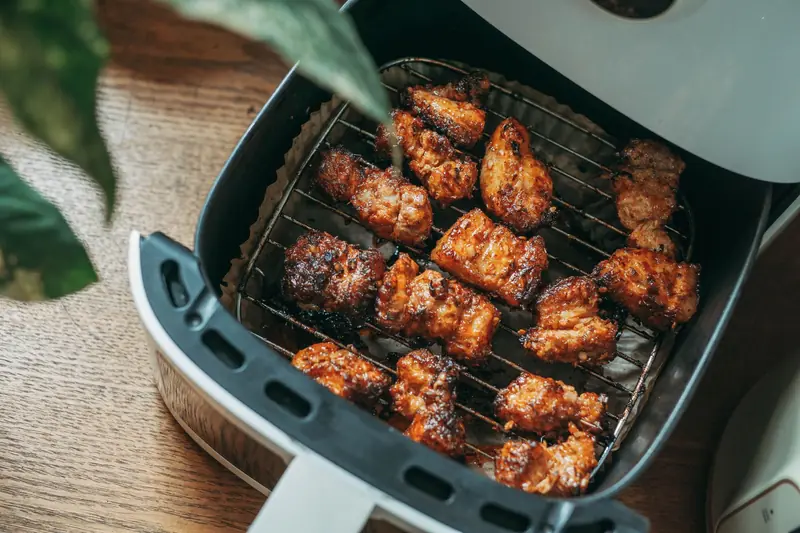
Best Air Fryers
Compare capacity, basket style and cleaning before you buy, then check every cook with a thermometer.

FAQ
What temperature is chicken breast done in an air fryer?
165°F (74°C) internal, the safe minimum for all poultry (FoodSafety.gov).
What temperature should salmon reach?
Fish should reach 145°F (63°C), or until the flesh is no longer translucent and separates easily with a fork (FoodSafety.gov).
Can I fill the basket to the top?
No. Overfilling may mean food does not cook evenly or reach the proper temperature (UNL Extension).
Related
-
-
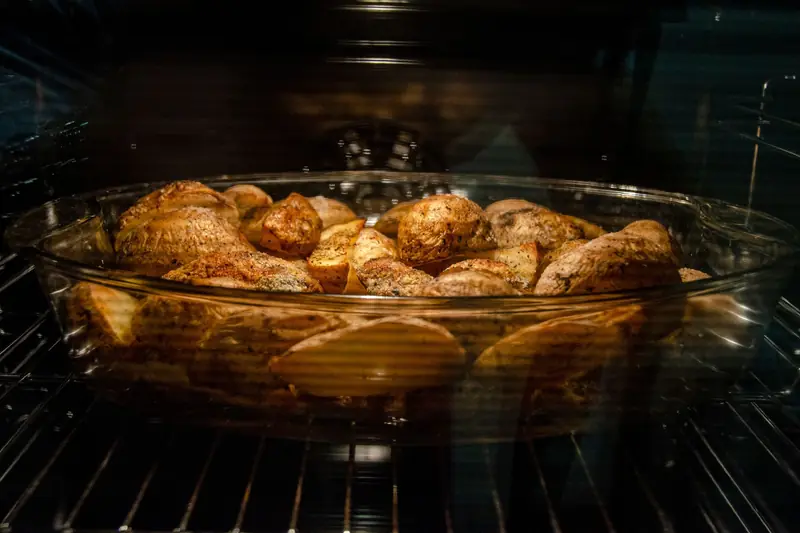
Comparison
Air Fryer vs Convection Oven: Which Do You Need?
Capacity, speed, crisping, space and cleanup compared.
-
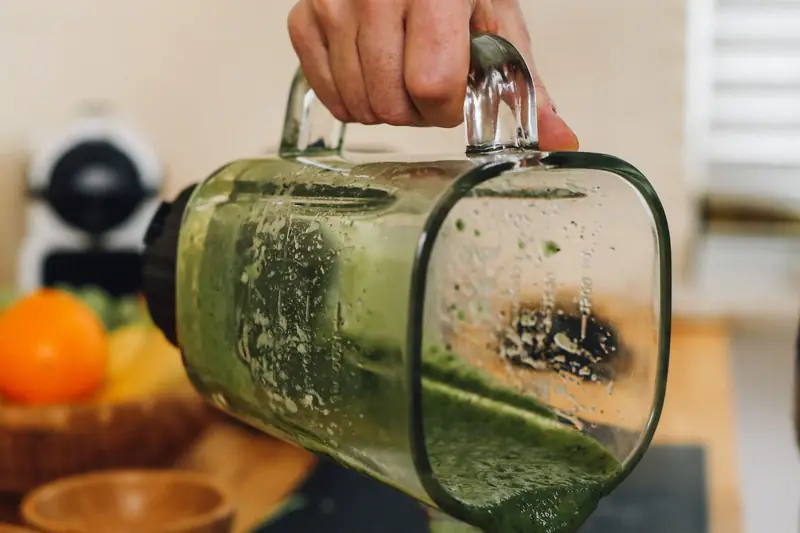
Buying guide
Best Blenders for Smoothies
Motor, jar size, personal cups, tamper and programs, side by side.
-
-
Guide
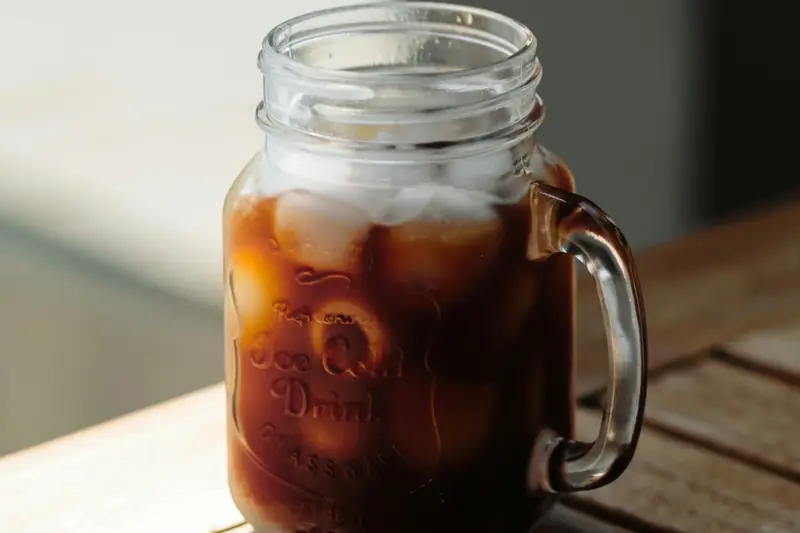
How to Make Cold Brew Coffee at Home
Ratio, grind, steep time and safe storage for cold brew concentrate.
Get the Brew Ratio Cheat Sheet
A printable one-page sheet with the ratio, grind, time and temperature for drip, pour-over, French press, cold brew and espresso. Free, and sized for the cabinet door.