
Coffee Grind Size Chart: From Espresso to Cold Brew
Which grind each brew method wants, with contact times and taste fixes.
Quick answer
Grind coarse (like rock salt) for French press and cold brew, medium (like kosher salt) for drip and pour-over, and fine (like table salt) for espresso, according to the National Coffee Association. If your coffee tastes bitter, try a coarser grind. If it tastes flat or watery, try a finer one (NCA).
Jump to section
Why grind size matters (contact time)
Grind size and contact time work as a pair. The finer the grind, the faster water pulls flavor out, so fine grinds need short contact. Coarse grinds need long contact. Pick a grind that suits how long your brew method keeps water and coffee together, and you are most of the way to a balanced cup.
That is why espresso, with a contact time of 20 to 30 seconds, uses a fine grind (NCA espresso guide), and cold brew, with about 12 hours of contact, uses a coarse one (NCA cold brew guide). Use a grind that does not match the time, and the cup comes out bitter or thin.
NCA's words for the two failure modes are over-extracted and under-extracted. Over-extracted coffee has given up too much, and it tastes bitter. Under-extracted coffee has given up too little, and it tastes flat or watery (NCA drip guide). The grind is the easiest dial to turn when you want to move between them, which is why this chart is the first thing to check when a cup disappoints.
A consistent grind matters as much as the size you pick. If the pieces vary widely, the small ones over-extract while the large ones under-extract, and you taste both problems in one cup.
The chart (NCA)
The National Coffee Association (NCA) groups grind size into three bands and gives a familiar texture for each (NCA French press guide).
| Brew method | Grind | Looks like |
|---|---|---|
| French press | Coarse | Rock salt |
| Cold brew | Coarse | Coarse, like French press |
| Drip | Medium | Kosher salt |
| Pour-over | Medium | Medium, like drip |
| Espresso | Fine | Table salt |
Two notes on the table. NCA's table gives the salt comparison for French press, drip and espresso; its cold brew and pour-over guides give coarse and medium for those methods. For pour-over, NCA's advice is to start with a medium grind and adjust (NCA pour-over guide), which is a good rule for any method.
Here is how to read it in practice. Rub a pinch between your fingers and compare it with the salt in your kitchen. Coarse grounds feel like separate, chunky grains. Fine grounds feel closer to powder, though espresso should not be as fine as flour. Medium sits between the two.
Each band connects to the method. French press keeps the grounds in the water for the whole brew, so a coarse grind keeps them from slipping through the mesh and from over-extracting. Drip and pour-over pass water through a paper or metal filter, so a medium grind gives water a path through the bed without rushing. Espresso forces water through under pressure for seconds, so the grounds must be fine to slow it down.
Pair this chart with our coffee-to-water ratio guide for the amounts to brew with.
Contact time by method
Contact time is how long the water stays in touch with the coffee. NCA gives these times:
| Brew method | Contact time |
|---|---|
| Drip | About 5 minutes (NCA) |
| Pour-over | 2-4 minutes (NCA) |
| French press | About 4 minutes (NCA) |
| Espresso | 20-30 seconds (NCA) |
| Cold brew | About 12 hours (NCA) |
For espresso, scope matters. The traditional Italian espresso specification gives an extraction time of 20 to 27 seconds (COMITCAF), narrower than NCA's 20 to 30. Both are valid for the scope they describe, so use NCA's range for general home brewing and the Italian one if you are following the traditional standard.
Dial in by taste
Taste tells you which way to move. NCA says: "Your coffee tastes bitter or sour: it may be ground too fine (over-extracted), so try a larger, coarser grind." It also says: "Your coffee tastes flat or watery: it may be ground too coarse (under-extracted), so try a smaller, finer grind" (NCA drip guide). In short: bitter or sour points to a coarser grind, and flat or watery points to a finer one.
Here is a short routine for dialing in:
- Brew with the starting grind for your method from the chart.
- Taste the cup before you change anything.
- If it is bitter, move one step coarser. If it is flat or watery, move one step finer.
- Brew again with the same amount of coffee and water, and compare.
- Stop when you like it, and note the setting.
Change the grind and nothing else, or you will not know which change worked. If you often swap methods, a grinder with clear, repeatable steps saves time; see our burr grinder guide.
For brewers sold with a manual, the SCA standard asks certified brewers to include a recommended grind, the standard 55 g/kg ratio, a filter type and cleaning steps in their manual (SCA Standard 310). If your machine has such a manual, start there.
Burr vs blade
A burr grinder crushes beans between two burrs set a fixed distance apart, so it grinds to a set size. A blade grinder chops unevenly. That unevenness means fine dust and big chunks in the same dose, which brew at different rates and muddle the cup.
A burr grinder also gives you real control over the size. Most have a dial or a set of steps that move the burrs closer together or farther apart, which is how you move between the bands in the chart. With a blade, the only control is how long you hold the button, so the result changes from batch to batch.
If you only make one thing and are not particular, you might get by with a blade. If you switch between methods or make espresso, a burr grinder is worth it. Our burr vs blade comparison goes through consistency, noise, cleaning and who should buy each.
Grinder settings are not universal
A grinder's dial or number is only a label. The same number on one grinder is not the same size on another, and it can even differ between two units of the same model. Our sources give no mapping from dial numbers to texture, so we do not give one.
Use the texture comparisons in the chart, plus your own taste, to find your numbers. Write the settings you land on for each method and keep them near the grinder. If you change beans, expect to nudge the setting, since different beans may need a small adjustment. Treat your notes as a starting point, not a rule.
Cleaning can also shift your results. Old grounds left in the burrs can mix with fresh ones, so follow the cleaning steps in your grinder's manual.
Espresso is the most sensitive, since a small step can move a shot well outside its time. If you make it often, look at grinders built for fine adjustment in our espresso grinder guide.
Gear that helps
-
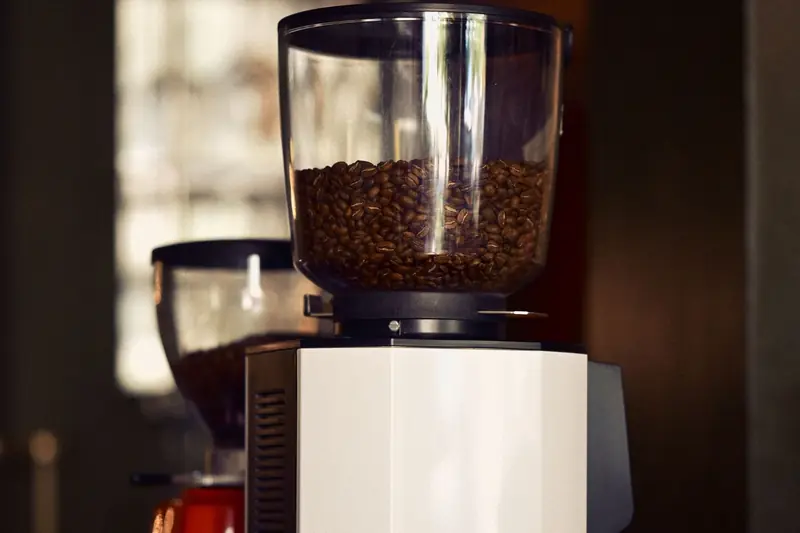
Best Burr Coffee Grinders for Home
A burr grinder with a wide range covers coarse through medium for most home brewing.
-
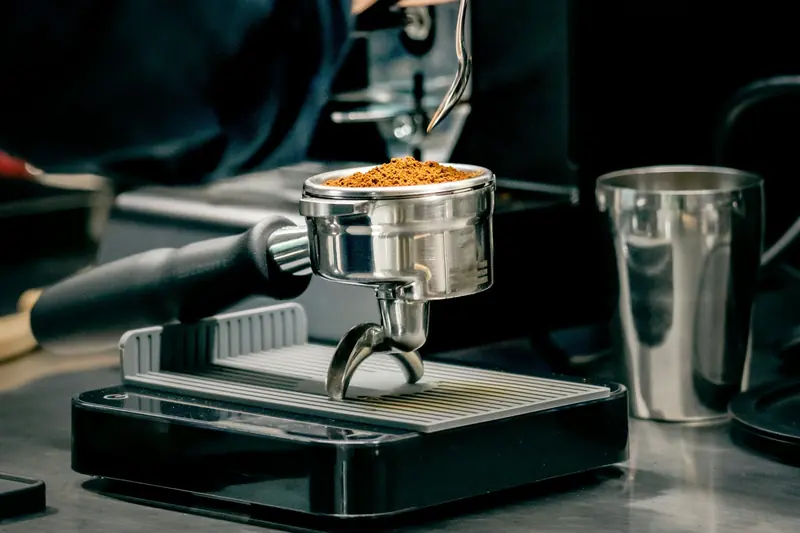
Best Grinders for Espresso
Espresso needs fine, repeatable adjustment, which is what espresso-focused grinders are built for.
FAQ
What grind is best for French press?
Coarse, like rock salt, and about 4 minutes of contact (NCA).
What grind is best for pour-over?
Start with a medium grind and adjust (NCA).
Is the same grind setting right on every grinder?
No. Dial numbers differ between grinders, so use the texture and your taste, not the number.
Related
-
Buying guide
Best Burr Coffee Grinders for Home
Burr type, grind range, adjustment and retention, side by side.
-
Buying guide
Best Grinders for Espresso
Burr size, fine adjustment, dosing and retention for espresso.
-
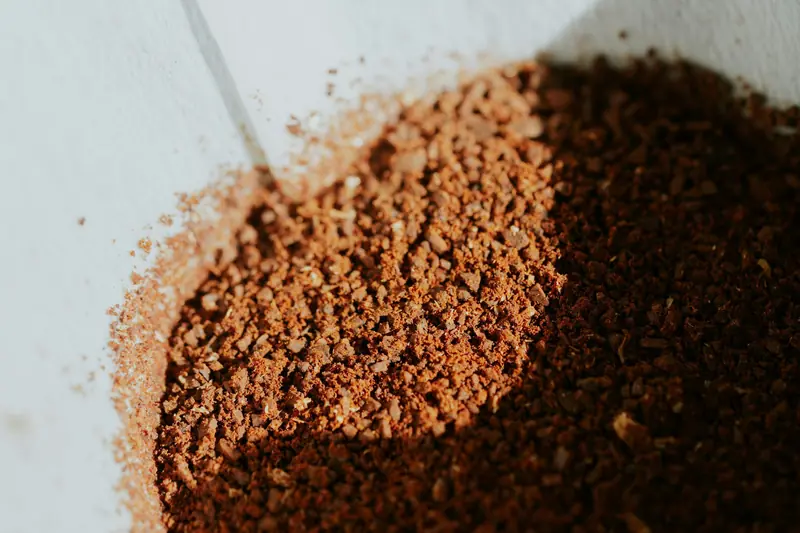
Comparison
Burr vs Blade Coffee Grinder: Is a Burr Grinder Worth It?
Even grinds and adjustability, or a simple chopper: which fits you.
-
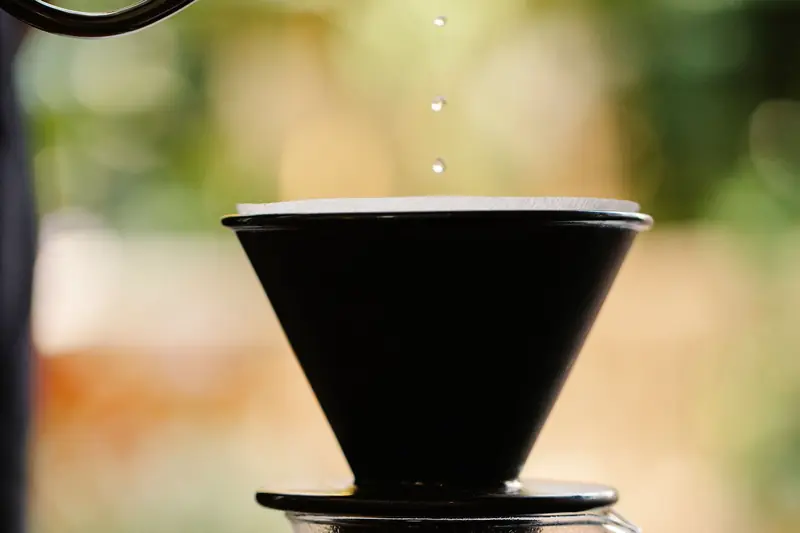
Buying guide
Best Pour-Over Coffee Makers and Drippers
Dripper shape, material, filters and capacity, side by side.
-
Guide
Coffee to Water Ratio: A Simple Chart for Every Brew Method
Ratio, grind, time and temperature for five brew methods, in one chart.
-
Guide
How to Make Espresso at Home with a Machine
The numbers, the steps and the cleanup for your first espresso shots.
Get the Brew Ratio Cheat Sheet
A printable one-page sheet with the ratio, grind, time and temperature for drip, pour-over, French press, cold brew and espresso. Free, and sized for the cabinet door.