
How to Make Espresso at Home with a Machine
The numbers, the steps and the cleanup for your first espresso shots.
Quick answer
Jump to section
What makes espresso espresso
Espresso is a small, concentrated coffee made by pushing hot water through finely ground coffee under pressure. It is defined less by the beans than by the method: a fine grind, a short extraction and real pressure. The result is a small shot with a layer of crema on top.
NCA describes crema as the "velvety, golden-brown top layer" of an espresso (NCA espresso guide). A good crema is a sign that the shot went well, though it is not the only sign, so taste matters too.
Two sources set the numbers in this guide. The National Coffee Association (NCA) gives practical home-brewing figures. The Italian specification published by COMITCAF, the "Disciplinare Caffè Espresso Italiano Tradizionale," describes traditional Italian espresso (COMITCAF). The Italian figures are translated from the Italian text, and where the two sources differ we say so.
Equipment you need
You need four things, and the fifth is optional.
- An espresso machine. One that can build pressure and hold a steady water temperature. Our beginner espresso machine guide compares the options, and our guide to machines on a budget helps if cost is the main limit.
- A grinder. Espresso needs a fine grind, "like table salt," according to NCA (NCA). Some machines have one built in; otherwise see our espresso grinder guide.
- A tamper and a portafilter. The tamper presses the grounds into a compact puck in the portafilter basket.
- A scale and a timer. A scale makes the ratio easy to hit, and a timer tracks the length of the shot.
- A milk frother or steam wand if you drink milk drinks.
The numbers: dose, ratio, time, temperature and pressure
Here is every number we have from the sources, in one place.
| Measure | Figure | Source |
|---|---|---|
| Dose (single, traditional Italian) | 7-9 g of ground coffee | COMITCAF |
| Ratio | About 1 g of coffee to 2 g of espresso (1:2) | NCA |
| Extraction time | 20-30 seconds (NCA); 20-27 seconds (traditional Italian) | NCA, COMITCAF |
| Water temperature at the group | 90-96°C | COMITCAF |
| Pressure | At least 8 bar | COMITCAF |
| Amount in the cup | 13-26 g, given as weight (traditional Italian) | COMITCAF |
The Italian figures describe the traditional espresso, and NCA's are for home brewing. Treat both as a window to aim for, not a pass-or-fail test. A shot that lands a little outside the window can still taste good, and a shot inside it can still taste poor. Use the numbers to explain what you taste, then adjust. The temperature and pressure are properties of your machine, so check the manual to see what it states.
Pulling your first shot
Follow these steps, and change one thing at a time.
- Weigh the dose. Grind and weigh your coffee, such as a dose within the traditional 7 to 9 g range for a single (COMITCAF).
- Distribute the grounds evenly. NCA says to distribute the grounds evenly, then tamp them into a compact puck (NCA).
- Lock in the portafilter. Do it right away, then start the shot without delay.
- Start the shot and the timer together. Put a cup, ideally on a scale, under the spout.
- Stop at about 1 g of coffee to 2 g of espresso. As simple arithmetic from the 1:2 ratio, the liquid in the cup should weigh about twice the dry coffee you started with.
- Check the time. About 20 to 30 seconds is the range NCA describes (NCA).
Dialing in
"Dialing in" means adjusting the grind until the shot runs for the right time and tastes balanced. It is the step that new baristas find hardest, and it is where a grinder with fine adjustment pays off.
If the shot runs much faster than the window, the grind is probably too coarse, and a finer grind will slow it. If it runs much slower, go coarser. Change the grinder one step at a time, and keep the dose the same so you can compare shots.
NCA's general rule for taste also applies: if the coffee tastes bitter or sour, it may be ground too fine (over-extracted), so try a larger, coarser grind. If it tastes flat or watery, it may be ground too coarse (under-extracted), so try a smaller, finer grind (NCA drip guide). Our grind size chart puts espresso in context with other methods.
Keep notes. Write the grinder setting, the dose, the time and how it tasted. Beans change, and so will your settings.
Milk drinks
Lattes, cappuccinos and flat whites start with a shot and add steamed or frothed milk. You have two routes: a steam wand on the machine, or a separate frother. A steam wand gives control and takes practice. A frother is easier and often cheaper. Compare options in our milk frother guide.
Pull the shot first, then froth the milk, so the espresso does not sit and cool. A shot with crema and milk on top still depends on a good base, so spend your first sessions on the espresso alone.
Cleaning after each shot
Cleaning protects both the taste and the machine. NCA's routine after a shot: remove the portafilter, discard the puck, clean and dry the portafilter, and rinse and brush the group head (NCA espresso guide).
Do this every time. Old coffee oils turn bitter, and a clogged group head can change how water flows. Follow your manual for deeper cleaning, and descale on schedule; our descaling guide explains how.
How much caffeine
NCA lists about 63 mg of caffeine in a 1 oz shot (NCA). That is only a typical figure, and the amount varies with the beans and the shot.
For healthy adults, the FDA says 400 mg of caffeine a day is "an amount not generally associated with negative effects." It also says rapid intake of around 1,200 mg can cause toxic effects such as seizures (FDA, content current as of 08/28/2024).
Gear that helps
-
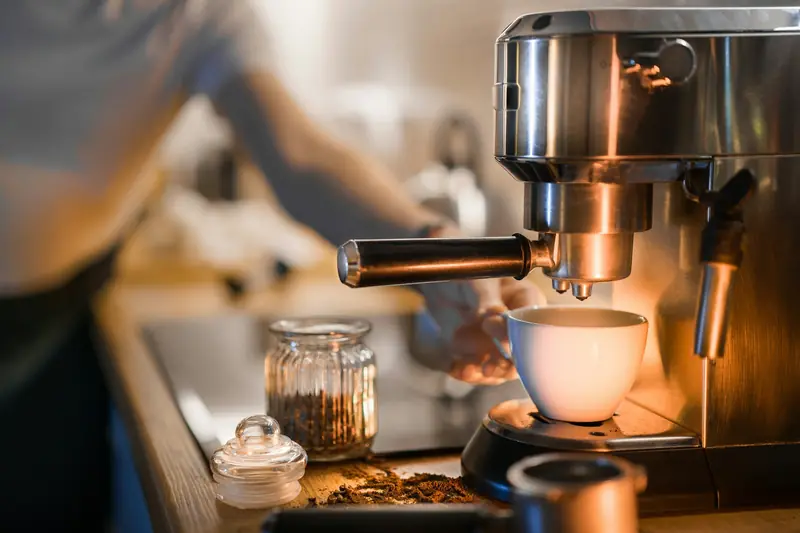
Best Espresso Machines for Beginners
A beginner-friendly machine is the place to learn the dose, tamp and timing in this guide.
-
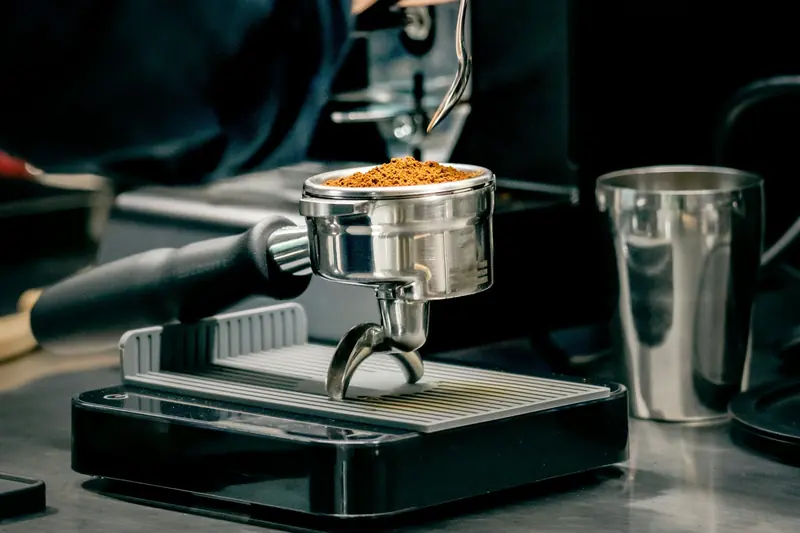
Best Grinders for Espresso
A grinder with fine adjustment lets you correct a shot that runs too fast or slow.
-
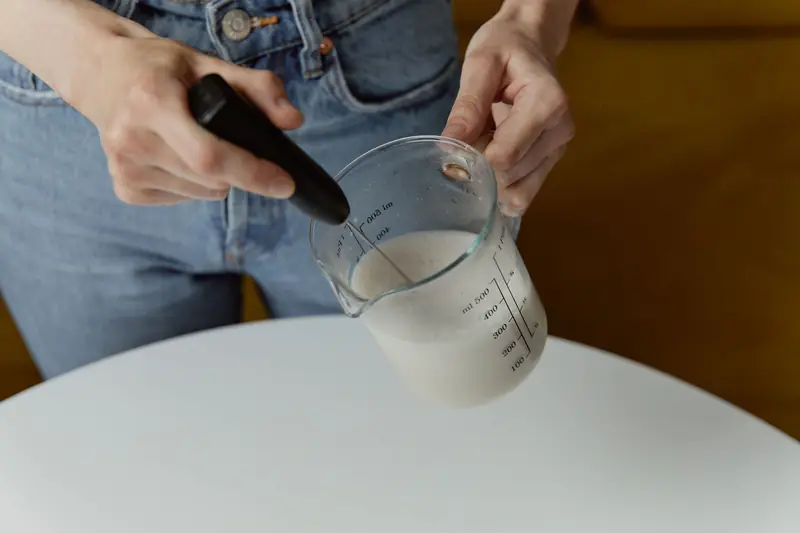
Best Milk Frothers
A frother covers the milk side of lattes and cappuccinos.
Related
-
Buying guide
Best Espresso Machines for Beginners
Machine type, grinder, milk system and descale alerts, side by side.
-
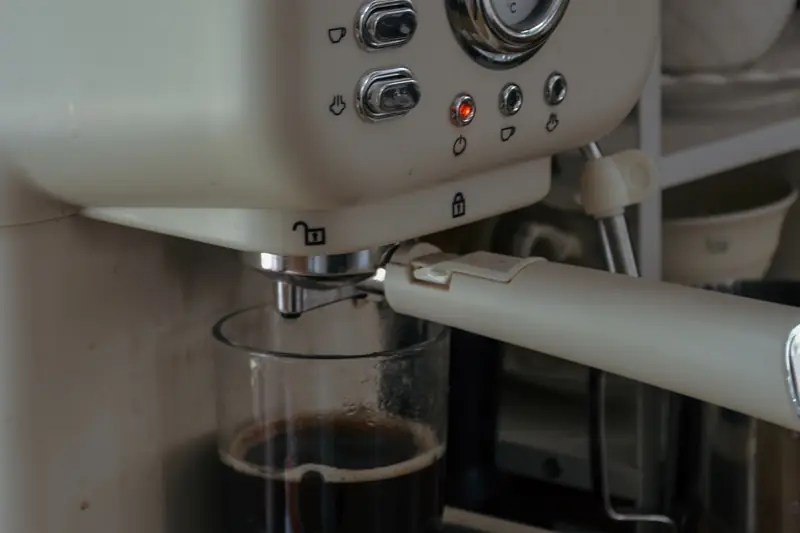
Buying guide
Best Espresso Machines Under $500
Temperature control, steam, baskets and warranty for budget machines.
-
Buying guide
Best Grinders for Espresso
Burr size, fine adjustment, dosing and retention for espresso.
-
-
Guide
Coffee Grind Size Chart: From Espresso to Cold Brew
Which grind each brew method wants, with contact times and taste fixes.
-
Guide
Coffee to Water Ratio: A Simple Chart for Every Brew Method
Ratio, grind, time and temperature for five brew methods, in one chart.
Get the Brew Ratio Cheat Sheet
A printable one-page sheet with the ratio, grind, time and temperature for drip, pour-over, French press, cold brew and espresso. Free, and sized for the cabinet door.