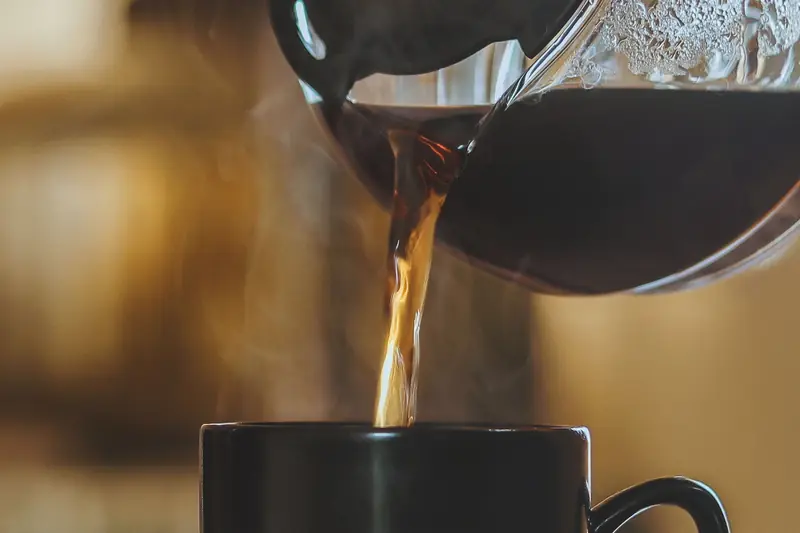
Best Drip Coffee Makers
A drip coffee maker automates the pour, so the things that matter are water temperature, how the carafe keeps coffee hot and how much it brews. This page is for households that make coffee every day and want a machine that does it the same way each time. We note SCA certification, where a listing states it.
Jump to section
What we look for
Brew temperature and SCA certification
water temperature decides how well a machine extracts the coffee.
Thermal or glass carafe
a thermal carafe keeps coffee hot without a hot plate.
Capacity and strength settings
match the capacity to your household and look for a strength or bloom setting.
Programmable timer
a timer means coffee is ready when you are.
Materials and cleaning
less plastic on the water path and easy cleaning keep taste clean.
- Sources: manufacturer product pages, manuals and warranty terms, plus the SCA brewer standard and the NCA drip guide.
How to choose the right drip coffee maker
For a more hands-on cup, compare pour-over vs drip coffee. If you want to brew by the numbers, start with our coffee-to-water ratio chart, and use our burr grinder guide to match the grind.
Brew temperature and SCA certification
Brewers certified to SCA Standard 310 must keep the slurry at 90 to 96°C and reach 1.15 to 1.55% brew strength at the standard 55 g/kg ratio (SCA). Check the SCA certified column. A machine without certification is not necessarily poor, but the listing may say little about its temperature.
Thermal or glass carafe
Under the SCA standard, a heated carafe must keep coffee at 80 to 85°C for the first 30 minutes (SCA). A thermal carafe needs no hot plate. Glass carafes are easy to see through and clean, but rely on a heater to stay warm.
Capacity and strength settings
Check the capacity column in cups, and note that makers define a cup in their own way. A strength or bloom setting gives you some control over the brew without changing the recipe. See the ratio in our coffee-to-water ratio guide. If you brew for guests only now and then, a larger capacity may sit unused, while a smaller machine is quicker to clean.
Programmable timer
A programmable timer starts the brew at a set time, so fresh coffee is waiting. Check whether it requires you to add water and grounds the night before. If you prefer fresh grounds, a model with a built-in grinder keeps everything in one machine, but compare it against a separate grinder first.
Materials and cleaning
Look at the materials on the water path and the carafe, and at how easy the parts are to remove and wash. NCA says to rinse the basket and any permanent filter after each use (NCA). Follow the manual for descaling. A model with a reusable filter has one fewer item to buy.
Tips for using your drip coffee maker
- Use NCA's Golden Ratio as a start: 1 to 2 tablespoons of ground coffee per 6 oz of water (NCA).
- Use cold, filtered water, and avoid distilled or softened water (NCA).
- Descale on schedule; see our descaling guide.
- Check the warranty column, since a brewer that runs every day has a lot of use to cover.
- SCA Standard 310 asks certified brewers to keep the slurry between 90 and 96°C (SCA), so an SCA-certified column in the table is a quick way to compare brew temperature.
- NCA says drip brewing takes about 5 minutes of contact (NCA). If your machine finishes far from that, our ratio chart and grind size chart can help you adjust.
FAQ
What does SCA-certified mean on a drip machine?
It means the brewer meets SCA Standard 310. Those machines keep the slurry between 90 and 96°C and reach a brew strength of 1.15 to 1.55% at the standard 55 g/kg ratio (SCA). Listings do not always say whether a model qualifies, so check the SCA certified column.
How much coffee should I use?
Is a thermal carafe better than glass?
A thermal carafe keeps coffee warm without a hot plate. For comparison, the SCA standard asks a heated carafe to hold coffee at 80 to 85°C for the first 30 minutes (SCA). Glass is easy to see through and clean.
How often should I descale a coffee maker?
NCA says major manufacturers recommend descaling at least every 3 to 6 months (NCA). Your manual may give its own instructions, and those come first.
Related
-
Buying guide
Best Pour-Over Coffee Makers and Drippers
Dripper shape, material, filters and capacity, side by side.
-
Buying guide
Best Burr Coffee Grinders for Home
Burr type, grind range, adjustment and retention, side by side.
-
Buying guide
Best Gooseneck Kettles for Pour-Over
Temperature control, spout flow, capacity and materials, side by side.
-
Comparison
Pour-Over vs Drip Coffee: Taste, Time and Cost
Hands-on control or push-button coffee: ratio, time and cleanup compared.
-
Guide
Coffee to Water Ratio: A Simple Chart for Every Brew Method
Ratio, grind, time and temperature for five brew methods, in one chart.
-
Guide
How to Descale a Coffee Maker (Drip, Espresso and Pod)
Why scale builds up, how often to descale and what to check in your manual.
Get the Brew Ratio Cheat Sheet
A printable one-page sheet with the ratio, grind, time and temperature for drip, pour-over, French press, cold brew and espresso. Free, and sized for the cabinet door.